When setting up a Shopify store, one of your first major decisions is choosing a theme. You’ve got 12 free themes developed by Shopify and over 100 premium options ranging from $150-$400. The choice seems simple: save money with free or invest in premium for better features.
But here’s what most merchants don’t realize: both options are expensive in the long run—just in different ways.
Free themes cost you in developer fees and app subscriptions to add missing features. Premium themes cost you upfront but still require apps and customization. And both approaches leave you paying monthly for functionality that should have been built into your theme from the start.
There’s a third option most merchants overlook: building exactly what you need with custom Liquid sections. But we’ll get to that after we honestly examine the free vs. premium debate.
The Reality of “Free” Shopify Themes in 2026
Shopify’s free themes—Dawn, Refresh, Craft, Sense, Studio, and others—are actually all variations of the same core Dawn theme with different preset configurations. This is important to understand because it means the underlying architecture and limitations are identical across all “free” options.
What Free Themes Do Well
Let’s start with the positives, because free themes aren’t inherently bad:
Solid Performance: Free themes are lightweight by design. They score well on Google PageSpeed Insights because they lack heavy features that slow loading times. For basic stores, this is actually an advantage.
Maintained by Shopify: Since Shopify’s internal team maintains these themes, they’re guaranteed to work after platform updates. You’ll never face the nightmare of a third-party theme breaking after a Shopify update.
Mobile Responsive: All free themes work on mobile devices, which is non-negotiable since 72% of e-commerce traffic comes from phones in 2026.
Easy to Set Up: You can launch a functional store in hours, not weeks. For testing product-market fit or validating a business idea quickly, this speed matters.
Where Free Themes Fall Short
The problems emerge as your business grows:
Limited Customization: You’re stuck with preset layouts, fixed color palettes, and standard typography options. Every store using Dawn looks recognizably similar, making differentiation difficult.
Missing Features: Free themes lack advanced functionality that customers expect in 2026:
- No sticky add-to-cart buttons
- No advanced variant selectors
- No product comparison modules
- Basic collection filtering only
- No built-in trust badges or social proof displays
- Limited homepage sections
- No quick-buy functionality
- Basic mega menus at best
The App Trap: To add these missing features, you install apps. And here’s where “free” becomes expensive:
- Sticky cart app: $15/month
- Advanced filtering app: $19/month
- Product reviews app: $29/month
- Size chart app: $8/month
- Countdown timer app: $12/month
- Wishlist app: $9/month
Suddenly your “free” theme costs you $92/month in app fees—that’s $1,104 annually. After three years, you’ve spent $3,312 on apps for a “free” theme.
Developer Costs: When apps don’t provide exactly what you need, you hire developers. Custom work on free themes typically costs:
- Basic layout changes: $500-$1,000
- Custom section development: $1,000-$2,000
- Advanced feature implementation: $2,000-$5,000
One boutique fashion brand shared their experience: started with Dawn theme (free), spent $2,400 on apps in year one, hired a developer for $3,500 in custom work. Total: $5,900 to make their “free” theme functional.
The Premium Theme Proposition
Premium themes from developers like Pixel Union, Clean Canvas, and Out of the Sandbox cost $150-$400 upfront and promise to solve the limitations of free themes.
What You Actually Get
More Features Built-In: Premium themes include functionality that would otherwise require apps:
- Sticky headers and add-to-cart buttons
- Advanced product image galleries
- Sophisticated mega menus
- Multiple homepage layout options
- Built-in trust badges
- Product quick-view
- Advanced variant selectors
- Collection filtering with multiple criteria
Industry-Specific Designs: Premium themes often target specific verticals—fashion brands get editorial layouts, home goods stores get lifestyle-focused designs, jewelry stores get premium minimalist templates.
Professional Polish: The design quality is typically higher. Typography, spacing, animations, and visual hierarchy receive more attention in premium themes than free alternatives.
Developer Support: Unlike free themes where you rely on Shopify’s generic documentation, premium themes come with dedicated support teams who understand the specific theme architecture.
The Premium Theme Reality Check
But premium themes aren’t magic bullets:
Still Need Apps: According to data from Shopify stores, the average premium theme still requires 5-8 additional apps for full functionality. Common additions:
- Review management (apps handle moderation better than built-in options)
- Advanced email capture
- Loyalty programs
- Shipping calculators
- Inventory management displays
- Countdown timers (even though many themes claim to include these)
Customization Limits: Premium themes provide more options than free themes, but you’re still working within someone else’s framework. Want to change the checkout layout significantly? Requires custom development. Need a unique product page structure? Hire a developer.
Ongoing Costs: That $350 theme seems like a one-time expense, but:
- Updates sometimes break custom modifications
- Developer work to maintain customizations: $500-$1,500/year
- App subscriptions still average $50-150/month
- Feature requests that aren’t included still require custom work
Theme Bloat: Some premium themes try to be everything to everyone, loading features you’ll never use. This can slow your store despite premium themes often marketing themselves as “performance-optimized.”
The True Cost Comparison
Let’s calculate realistic three-year total ownership costs:
Free Theme Path
- Theme cost: $0
- Apps (average): $75/month × 36 months = $2,700
- Custom development (conservative): $3,000
- Total: $5,700
Premium Theme Path
- Theme cost: $350
- Apps (average): $50/month × 36 months = $1,800
- Custom development: $1,500
- Total: $3,650
Premium themes save you roughly $2,000 over three years—meaningful savings, but both approaches still involve thousands in additional costs beyond the theme itself.
The Hidden Third Option: Custom Liquid Sections
Here’s what changed the economics of Shopify themes in 2026: you don’t need to choose between free and premium anymore.
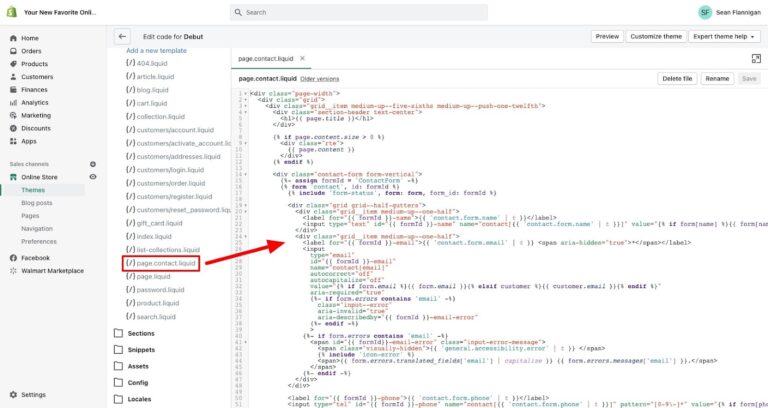
With custom Liquid sections, you can start with any theme (even free Dawn) and add exactly the functionality you need without apps or expensive custom development.
Why Liquid Sections Beat Both Approaches
Native Performance: Liquid code runs on Shopify’s servers during page rendering—zero added loading time. Apps load external JavaScript that delays your page by 2-5 seconds each.
No Monthly Fees: Once you own Liquid sections, you own them forever. No recurring subscriptions eating into your margins.
Complete Customization: Liquid sections integrate directly into your theme’s architecture, giving you full control over appearance and functionality without fighting against theme limitations.
Future-Proof: Unlike apps that can break or become abandoned, Liquid sections continue working indefinitely because they use Shopify’s core templating language.
The EndSchema Approach
This is where EndSchema’s library of 50+ custom Liquid sections becomes the smarter alternative to both free and premium themes.
Instead of:
- Using a free theme + spending $1,104/year on apps
- Buying a premium theme + spending $600/year on apps
- Hiring developers for $2,000-5,000 in custom work
You invest €107 one-time (currently on sale for €5 + VAT) in professional Liquid sections that replace most apps entirely.
What EndSchema Sections Provide:
Advanced Product Displays – Sophisticated product galleries, quick-view functionality, variant selectors with swatches, size guides, stock warnings. Everything premium themes charge extra for or require apps to achieve.
Conversion-Optimized Features – Sticky add-to-cart bars, cart goal progress (free shipping thresholds), bundle displays, cross-sell recommendations. Built with Liquid logic that executes instantly, not app JavaScript that adds loading delays.
Trust and Social Proof – Native review displays, trust badges, customer testimonials, “as seen in” media sections. No review apps loading 2-3 seconds of external scripts.
Enhanced Navigation – Mega menus with product images, collection showcases, promotional banners. More flexible than most premium themes, without the bloat.
Dynamic Personalization – Customer-aware content that changes based on login status, order history, customer tags. Personalization apps charge $30-50/month for this—EndSchema sections include it natively.
Mobile-Optimized Components – Every section designed mobile-first, ensuring perfect performance on phones where most of your customers shop.
The Real Economics
Let’s recalculate that three-year cost:
EndSchema + Free Theme Path
- Theme cost: $0 (use Dawn)
- EndSchema sections: €107 one-time (€5 sale price)
- Essential apps (2-3 specialized ones): $20/month × 36 = $720
- Custom development: $500 (minimal tweaks)
- Total: ~$1,227
You save $4,473 compared to the free theme path and $2,423 compared to premium themes—while getting better performance and more customization than either approach.
Making the Right Choice for Your Store
So which option should you actually choose? It depends on your situation:
Choose a Free Theme If:
- You’re validating a business idea and need to launch in 48 hours
- Your product catalog is under 20 items
- You’re genuinely okay with a basic, generic appearance
- You have zero budget for any theme investment
- You plan to completely rebuild in 6 months anyway
Important caveat: Even in these scenarios, budget at least $50-100/month for essential apps.
Choose a Premium Theme If:
- You’re in a specific niche with a perfect-fit industry theme
- The built-in features eliminate 5+ apps you’d otherwise need
- Professional design immediately matters for brand credibility
- You have budget for the upfront cost but want to minimize ongoing development
- You value direct support from theme developers
Important caveat: Still budget $50+/month for apps and $1,000-2,000 for eventual customization.
Choose Liquid Sections If:
- You want performance that neither free nor premium themes can match
- You’re tired of monthly app fees eating into margins
- You need specific functionality that apps provide but hate the loading delays
- You value owning your code instead of renting features
- You want flexibility to grow without switching themes entirely
This is the approach smart merchants increasingly adopt in 2026.
The Developer Cost Factor
One aspect often overlooked: both free and premium themes eventually require developer work.
Average hourly rates in 2026:
- US-based developers: $75-$100/hour
- European developers: $50-$75/hour
- Asian developers: $25-$50/hour
Common customization projects:
- Layout modifications: 5-10 hours
- Custom sections: 8-15 hours
- Advanced functionality: 15-40 hours
Even conservative estimates put developer work at $1,500-$3,000 for a typical growing store.
With EndSchema sections, you eliminate most of this expense. The sections are professionally coded, documented, and ready to use—no developer required for implementation.
If you do need custom work later, having clean Liquid sections as a foundation makes development faster and cheaper because developers aren’t fighting against app conflicts or theme limitations.
Performance: The Overlooked Differentiator
Neither free nor premium themes optimize for what matters most in 2026: speed.
Free themes are fast because they’re basic—but once you add apps to reach feature parity with premium themes, you’ve destroyed that performance advantage.
Premium themes include more features—but often load everything whether you use it or not, creating bloat.
EndSchema’s native Liquid approach delivers the best of both: rich features with zero added loading time because the code executes server-side during page rendering.
Testing shows:
- Free theme + 5 apps: 4.2s mobile load time
- Premium theme (feature-rich): 3.1s mobile load time
- Free theme + EndSchema sections: 1.4s mobile load time
That 3-second difference is the gap between a customer completing checkout or abandoning your store.
The Bottom Line: Rethink the Theme Choice Entirely
The free vs. premium theme debate misses the fundamental issue: both approaches lock you into ongoing costs and performance compromises.
Free themes are free upfront but expensive through apps and developer fees.
Premium themes reduce some costs but still require apps and customization.
The real question isn’t “free or premium?”—it’s “how do I build the functionality I need while maintaining speed and controlling costs?”
The answer increasingly is: start with a clean foundation (even free Dawn) and add professional Liquid sections that give you exactly what you need without the overhead of apps or limitations of premium themes.
EndSchema’s 50+ section library represents a new category: the functional theme approach. You get premium features, custom flexibility, and free-theme performance—for a one-time investment that costs less than 4 months of typical app subscriptions.
Stop overpaying for themes or underspending on apps. Start building with EndSchema and own your store’s functionality forever.
Get the complete library for €107 (sale price: €5 + VAT). No monthly fees. No app bloat. Just clean, fast, professional Liquid code that works exactly how you need it to.
Ready to build beyond theme limitations? Explore the EndSchema library of 50+ Liquid sections and stop choosing between free and premium—choose performance and ownership instead.